


Stake is facing mounting legal trouble in the United States as a new class action lawsuit has been filed against the company in Alabama federal court, accusing it of running an illegal online gambling operation in violation of the state’s stringent anti-gambling laws.
The lawsuit, filed on 2 May in the US District Court for the Northern District of Alabama, names plaintiffs Laura Hall and her minor child, J.C., along with other similarly affected Alabama residents.
It alleges that Stake.us has been deceptively marketing and operating its website as a legal “sweepstakes” platform, while in reality offering unlicensed, casino-style gambling games such as slots, poker, blackjack, and roulette — all of which are prohibited under Alabama law.
This marks the third class action suit filed against Stake.us in recent months, following similar complaints in California and Illinois.
‘An old gimmick’
“Stake will ask the Court to disbelieve its own eyes and conclude that Stake.us is not really a gambling operation, but instead offers legal ‘sweepstakes,’” the complaint states. “That is an old gimmick that was once popular among criminals in the early 2000s.”
The suit likens Stake’s business model to the now-defunct “internet café” gambling parlours that were shut down across the US more than a decade ago.
These establishments, often tucked into suburban strip malls, would sell products like internet time or phone minutes — bundling them with sweepstakes entries used to play slot machine-style games for cash prizes.
“Stake attempts to separate the element of consideration from chance by offering a two-tiered system of virtual coins, both of which function like casino chips, while calling the whole affair a ‘sweepstakes,’” the lawsuit claims.
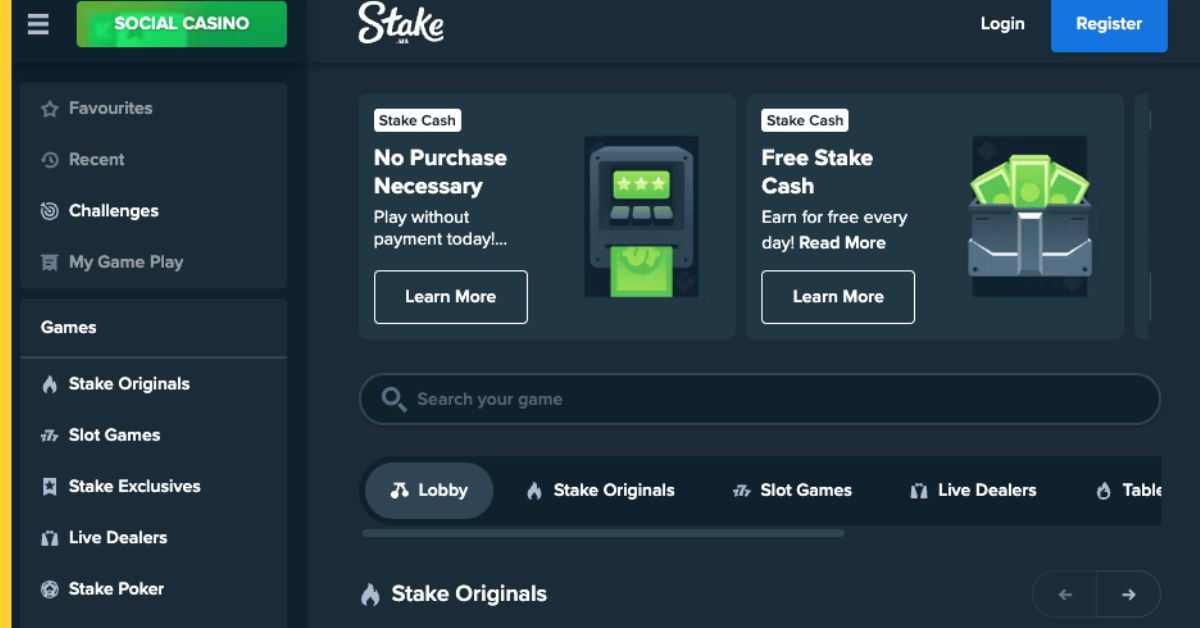
According to the complaint, Stake.us operates under the corporate entity Sweepsteaks Limited and promotes over 200 games by well-known providers, including slots, poker, and table games.
Internet café playbook
The brand boasts high-profile celebrity partnerships — most notably with rapper Drake — to enhance its appeal.
On its website, users are offered “a chance to win big alongside Drake,” language the complaint argues contradicts the company’s claim that its platform does not offer gambling.
Central to the legal challenge is the platform’s dual-currency system.
Users purchase “Gold Coins” for social, non-monetary gameplay. However, they also receive “Stake Cash” — a virtual currency that can be converted into cryptocurrency or gift cards.
The lawsuit contends this so-called “free” Stake Cash functions as a real-money substitute and is critical to the gambling experience.
“In short, Defendant is copying the internet café playbook, but instead of selling Internet time, long-distance phone minutes, or small groceries coupled with supposedly “free” sweepstakes tokens, Defendant sells Gold Coins, which are then ignored so that players can use the Stake Cash for cryptocurrency gambling.”
Restricted jurisdictions
Adding to the controversy is the claim that Stake.us has deliberately avoided listing Alabama among its restricted jurisdictions, allowing users in the state full access to its gambling features.
“Stake engaged in unconscionable, false, misleading, or deceptive acts or practices… including causing Plaintiff and Class members to believe Stake.us was approved and certified by the State of Alabama, when in fact it is illegal gambling,” the suit alleges.
The plaintiffs are seeking a permanent ban on Stake.us operating within Alabama and restitution for financial losses incurred by users.
Court filings argue that Stake has “massively scaled up” the old internet café model by moving it online, using modern branding and celebrity marketing to mask what they say is a plainly illegal enterprise.
NEXT.io has contacted Stake for comment.

