


Betting brands have until 5 October to disappear from Brazilian football shirts under Provisional Measure (MP) 1,394/2026, before the sector’s 85 licences are extinguished on 25 October.
Some operators are using the MP to walk away, without penalty, from deals that were no longer paying off for them, according to a report in Folha de S.Paulo. Others are suspending their contracts, hoping the measure will be overturned by Congress or the Supreme Court (STF).
At stake is around R$1.03bn ($201m) in sponsorship paid to Série A clubs in 2025, according to Convocados, a Brazilian consultancy specialising in football management and finance. Experts who spoke to NEXT.io agree the money will not be replaced any time soon, but are split over how much damage the MP has done to investor confidence in the country.
An exit door or a pause
The most visible break-up is at Vitória. The Salvador-based club’s main shirt sponsor, 7K Bet, ended its contract due to run until 2027 without paying a penalty, citing the MP. The club is set to lose an expected $8.8m for 2027, plus revenue from advertising boards.
When contacted by NEXT.io, Ana Gaming, the holding company behind 7K Bet, did not confirm the termination. In a statement, the company said the MP “changes the sector’s operating conditions, with impacts on its entire chain of commercial relationships” and that “the adjustments arising from this scenario are being carried out with responsibility, caution and respect for partners”.
At the other end of the spectrum is Santos, whose contract worth up to R$85m with Novibet has been suspended rather than terminated. Novibet declined to comment when contacted by NEXT.io.
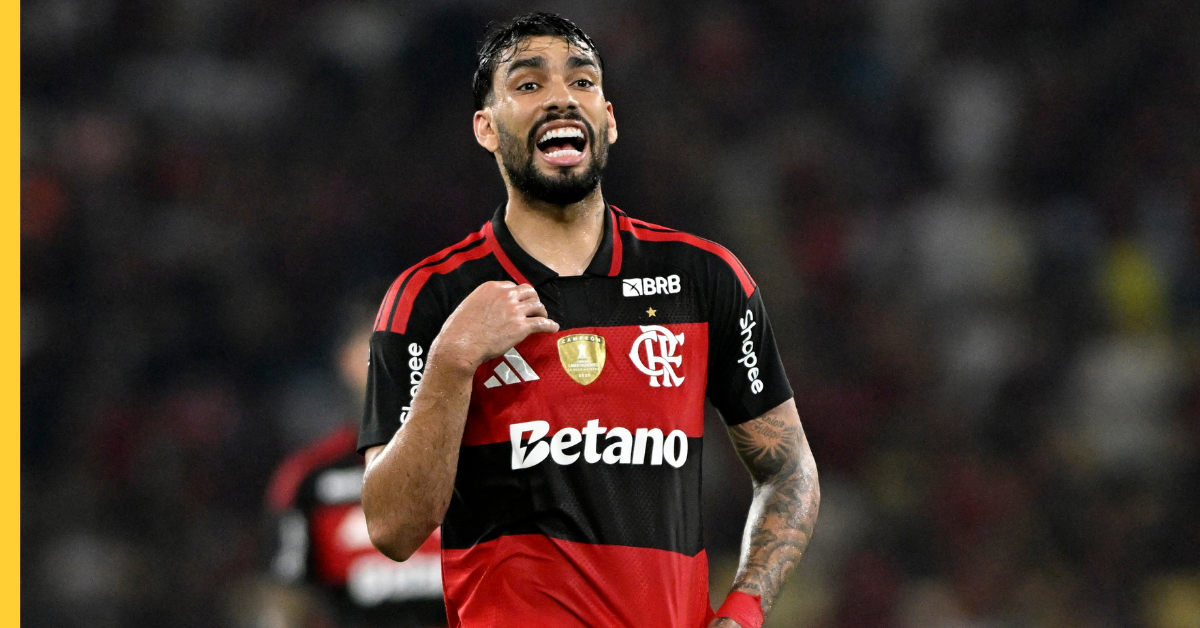
The market expects Flamengo’s deal with Betano and Corinthians’ deal with Esportes da Sorte, the latter worth up to R$200m a year and running until 2029, to follow the same path. Betano did not comment individually to NEXT.io and referred questions to the Brazilian Institute for Responsible Gaming (IBJR).
The logic behind contract suspension echoes the Covid-19 pandemic, when the same mechanism was used to preserve contracts amid significant uncertainty. Brands’ long-term strategies for building fan loyalty play a part, as does the competition for main shirt sponsorship, one of the most coveted properties in Brazilian sports marketing.
For Fabio Wolff, managing partner at sports marketing firm Wolff Sports, even suspended contracts are unlikely to return as they were. “I wouldn’t count on an automatic return to the same values,” he told NEXT.io. “Brazil remains a relevant market, and football has a great capacity to attract consumers. But allowing companies to operate again doesn’t mean immediately recovering the confidence of those who make investment decisions.”
How much is at stake
For Cesar Grafietti, an economist and partner at Convocados, a Brazilian consultancy specialising in football management and finance, the impact goes beyond the shirt. “There are three impacts on the industry. The first and most obvious is on sponsorship. We’re talking about an immediate reduction in contracts that represented more than R$1bn a year in revenue,” he told NEXT.io.
Next come pitchside advertising boards. “Most of the clients for these boards were betting companies, and we’re talking about at least another R$500m in revenue that disappears.” Finally, there are the sponsorship packages sold to betting firms by the companies that hold broadcast rights. In that case, he says, the effect can be mitigated because those slots are easier to resell, “but there’s still a risk”.
On average, betting’s weight in club finances is moderate. Sponsorship accounted for 7.2% of Série A clubs’ total revenue of R$14.3bn in 2025, according to Convocados. The impact, however, is concentrated. At São Paulo, betting accounted for 73% of marketing revenue in 2025, according to consultancy Sports Value, as cited by Gazeta do Povo.
Flamengo, which holds the country’s most valuable sponsorship deal, with Betano, estimates losses of up to R$430m for the club and around R$2.5bn for Brazilian football, according to UOL.
There is also an immediate bill: Flamengo already had 400,000 units of its 2027 kit ready, in addition to this year’s merchandise. Clubs and kit suppliers will have to decide quickly how to adapt these products and who bears the cost.
From strike threats to the Supreme Court
The clubs’ response began with political pressure. Executives from some of the leading Série A clubs discussed halting the Brazilian championship to push the government into reviewing the MP, according to Folha.
A meeting called by the government and brokered by the Brazilian Football Confederation (CBF), scheduled for 29 September, was cancelled amid the risk of a boycott. Clubs are calling for a transition period, arguing that the abrupt end to betting jeopardises their 2026 and 2027 budgets. The CBF, which has a sponsorship deal with Betano, has not commented on the MP.
The clubs’ anger is also a response to the president’s rhetoric. “It’s important to remember that São Paulo were world champions three times and had no bet [betting operator]. Santos were world champions twice and had no bet. Grêmio were world champions and had no bet. Flamengo were world champions and had no bet. Internacional were world champions and had no bet. And my Corinthians were world champions twice and had no bet,” Lula said.
The MP was signed nine days before the first round of the general election, and the ban is supported by 73% of voters, according to an AtlasIntel/Bloomberg poll.
The dispute then moved to the courts. On 29 September, Flamengo asked the STF to join ADI 8027 as amicus curiae (friend of the court). The direct action of unconstitutionality was filed by the National Association of Games and Lotteries (ANJL) and the IBJR, with Justice Luiz Fux as rapporteur.
As amicus curiae, the club does not become a party to the case but can submit information and arguments to the court. In its petition, Flamengo argues that the ban directly hits sport’s funding and that the 10-day deadline to remove brands is insufficient. Palmeiras is expected to follow suit, according to Globo Esporte, and clubs are coordinating to act as a bloc.
Who fills the gap
Candidates to replace the betting firms have already emerged. As soon as the government announced the measure, Fatal Model, an escort advertising platform, offered more than R$100m to Flamengo and Corinthians for the space, according to Folha.
Chinese carmakers and tech firms have also expanded their presence in football, but in secondary properties: BYD sponsors Bahia and Corinthians, and GAC sponsors Flamengo in 2026, according to Exame. Atlético Mineiro signed a five-year deal with Huawei, but it covers technology supply for the Arena MRV stadium, with no exposure on the club’s commercial properties.
For Erich Beting, CEO and founder of Máquina do Esporte, which describes itself as Brazil’s largest media outlet specialising in sports business and sports marketing, a like-for-like replacement is unlikely.
“A direct replacement at the values the betting companies were paying for the main shirt sponsorship is very unlikely,” he told NEXT.io. The reason, he says, is that betting operators “live solely and exclusively from the business of sport”. “They’re endemic to the sports universe, so for them the numbers added up to more anyway.” The way forward for clubs, Beting says, is to improve what they deliver to sponsors, show consistent brand work and target booming sectors that could benefit from the space.
What if the MP falls?
Wolff expects a more cautious recovery, “with shorter contracts, protection clauses and greater demands for results,” he says. “Regulatory risk now comes into the equation: if a company can’t predict how long it will be able to exploit that sponsorship, it tends to commit less money.” The pressure on values, he says, will be greatest at clubs with fewer sponsor alternatives. Those with the largest fanbases may preserve high-value contracts thanks to competition between brands, but will also face tougher negotiations, and part of the investment could go to other markets.
For Grafietti, lost revenue is not what weighs most on investors’ assessments. “The biggest problem is the legal uncertainty this decision creates. The problem isn’t changing the rules of the game, but changing them without debate and without assessing risks, amending a law that had just been approved and was still in its early stages of operation. Those entering new markets want security so that their valuation is lasting.”
The economist notes that SAFs, the corporate structure that allows Brazilian clubs to take outside investment, already faced mistrust after episodes such as Vasco da Gama’s. The club sold 70% of its SAF to US-based 777 Partners in 2022 and regained control in 2024, after a Rio de Janeiro court suspended the contract amid the group’s financial crisis. For Grafietti, the MP “only reinforces the feeling that planning is worth little”.
Not everyone sees lasting damage. “Of course, I think the brands will come back, because actually, if it were up to them, they wouldn’t leave the country,” Beting said. For him, the episode is simply a moment of exit and return for brands. “I don’t think it changes absolutely anything about the appetite that exists for the Brazilian market.”
Beting, however, puts part of the blame on the operators themselves. “The image crisis that already existed in the betting market has turned into a business crisis, and that’s what the operators didn’t realise, or pretended not to realise. They perhaps thought their political lobby would be bigger than this.”
The sector, he says, needs clearer rules and much greater care for bettors. “It’s very easy to blame the government, but the operators didn’t do their job, they didn’t care about the customer, and then the bill came, brutally, but it came.” He compares the sector with the alcohol and tobacco industries: the former, according to Beting, understood that looking after the customer “means protecting your business”, while the latter operated on the margins of the law and ended up facing severe penalties. “That’s what we’re seeing happen now in the betting market.”
The model to follow, he says, is the English one, where Premier League clubs have voluntarily agreed to remove betting brands from the front of their shirts from the 2026/27 season.
“An indebted fan or a fan trapped in addiction is a fan who stops generating revenue for football, and you lose that income,” Beting said. Brazil, he argues, should learn from England “both in market regulation and in the day-to-day handling of the bettor’s relationship with betting”.
Wolff sums up the challenge for clubs. “A possible return of betting could recover revenue, but not necessarily under the same conditions. Confidence takes longer to return than authorisation to operate. For clubs, the need remains to diversify sponsors and reduce dependence on a single sector.”

