



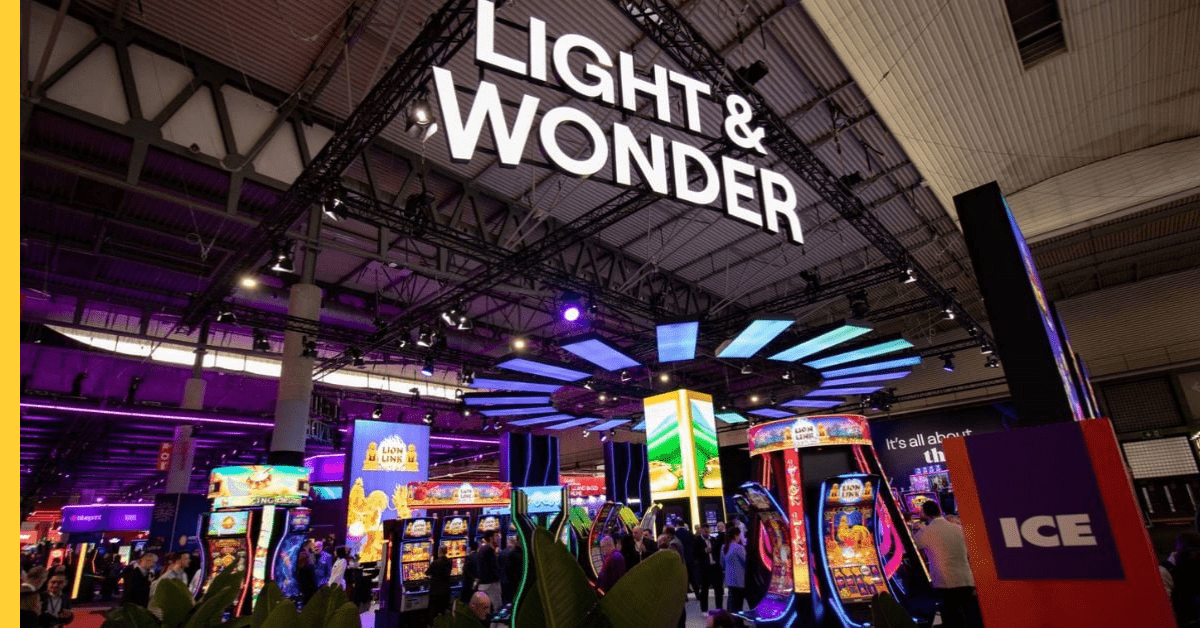
Light & Wonder’s Q1 2026 results showed revenue growth, wider adjusted margins and stronger adjusted free cash flow, while net income declined because of legal reserve contingencies and related settlements.
The Las Vegas-headquartered gaming supplier said revenue for the quarter ending 31 March rose 2% year-on-year to $790m, up from $774m. Net income went the other way, however. Profit fell 37% to $52m, or $0.66 per diluted share, compared with $82m, or $0.94 per diluted share, a year earlier.
Still, iGaming operations continue to be a strong driver. iGaming revenue increased 18% to $91m, while adjusted EBITDA from the segment rose 22% to $33m.
Wagers processed through L&W’s iGaming platform reached a quarterly record of $29.9bn, supported by North American momentum, first-party content and partner network growth.
L&W president and CEO Matt Wilson said: “iGaming delivered another double-digit growth quarter in both revenue and AEBITDA, while SciPlay continued to expand its DTC revenue.
“Looking ahead, we remain focused on investing in product innovation and talent to further strengthen our recurring revenue model and enhance our global competitive position as we progress toward our 2028 financial targets.”
Revenue from L&W’s social gaming unit SciPlay declined 7% to $187m, reflecting weakness in Jackpot Party Casino players. Direct-to-consumer revenue rose to $50m, representing 27% of SciPlay revenue. SciPlay adjusted EBITDA increased 3% to $66m, with margin improving to 35%.
Gaming revenue increased 3% to $512m. Gaming operations revenue rose 38% to $239m, supported by installed-base growth and the contribution from Grover charitable gaming.
Table products revenue increased 24% to $63m. Gaming machine sales revenue fell 25% to $156m, reflecting the timing of international and North American video lottery terminal shipments in the prior-year period.
Gaming systems revenue declined 14% to $54m because of lower hardware sales.
Light & Wonder said its North American premium installed base grew for the 23rd consecutive quarter, adding more than 2,550 units year-on-year and 650 sequentially.
Grover, which it acquired last year, added 660 units sequentially and ended the quarter with more than 12,200 installed base units, including expansion into Indiana’s recently legalised market.
Adjusted results paint better performance
The main drag on the firm’s performance was legal. Light & Wonder said roughly $50m in legal reserve contingencies tied to legacy matters weighed on the quarter.
The company said those items cut year-on-year net income growth by about 61% and diluted EPS growth by about 67%.
Cash generation was also hit. Net cash from operating activities fell to $139m from $185m, mainly because of $137m in litigation settlement payments.
However, adjusted results showed a different picture. Consolidated adjusted EBITDA rose 5% to $327m from $311m, on an improved margin of 41%, up from 40%.
Adjusted net profit after tax and amortisation (NPATA) was $115m, compared with $117m a year earlier, but adjusted NPATA per diluted share rose 7% to $1.45. Adjusted free cash flow increased 86% to $207m, helped by earnings generation, receivable collections and lower income tax payments.
The company ended the quarter with $5.2bn in principal face value of debt outstanding and a 3.5x net debt leverage ratio.
It expects full-year 2026 consolidated AEBITDA growth in the mid- to high-single digits, while noting tariff-related cost pressures, macroeconomic uncertainty and higher UK iGaming duties.
The results have hit the company’s stock, as well. Trading on the Australian Securities Exchange, Light & Wonder has continuously dropped from its six-month high of A$182.50 on 12 January.
As of today, the stock sits at A$102.66.

