In recent years, Kalshi has rolled out the ability to trade on real events, instead of just traditional stocks. This has made the site one of the most popular and unique trading sites in the USA.
Top Kalshi Alternative for October
Just like any other trading site, there’s a Kalshi fees structure to consider. Coming up in this guide, we will take a look at the fee structure, paying close attention to what you can expect to pay in trading fees, maker fees, and even for deposits and withdrawals. Keep reading for a detailed breakdown of the different fees and commissions that you will encounter.
Details
Available Languages
en
Accepts Customers from
US
Show States
AL, AK, AZ, AR, CA, CO, CT, DE, FL, GA, HI, ID, IL, IN, IA, KS, KY, LA, ME, MD, MA, MI, MN, MS, MO, MT, NE, NV, NH, NJ, NM, NY, NC, ND, OH, OK, OR, PA, RI, SC, SD, TN, TX, UT, VT, VA, WA, DC, WV, WI, WY
Kalshi is a regulated prediction market and exchange, where participants can trade contracts on the outcome of real events, such as sports, political elections, and entertainment. It’s approved by the CFTC (Commodity Futures Trading Commission), making it widely available. You can find out more about the site and its offerings in our detailed
Kalshi review.
Because Kalshi is such a popular and widely available site, it’s even more important for you to understand the pricing, fees, and commission. Whether you are a novice, casual trader, or a serious trader, you need to know the full breakdown of the potential fees.
Breakdown of All Kalshi Fees
As you can imagine, there are several fees and commissions that you will encounter while participating in the exchanges and prediction markets at Kalshi. This is why you need to look into the Kalshi fee structure, which we will highlight on this page.
Trading Fees
Kalshi makes its money by charging participants a transaction fee on every contract. The fees will vary depending on the markets and events; for example, some special events will have a different set of fees.
Kalshi trading fees are only added when orders are matched. Any orders that aren’t matches are not charged. Instead, they are left as ‘resting orders’. The current fee for
Kalshi event contracts
is calculated with the following formula:
Fees = round up (0.07 x C x P x (1-P))
P = price of the contract
C = number of contracts being traded
Round up = rounds to the next cent
Maker Fees
Some markets will have a maker fee attached. This happens when an order isn’t immediately matched and is left as a ‘resting order’. This fee is then only applied once the trade concludes; otherwise, there are no fees for canceling a resting order.
Maker fees are calculated with the following formula:
Fees = round up (0.0175 x C x P x (1-P))
P = price of the contract
C = number of contracts being traded
Round up = rounds to the next cent
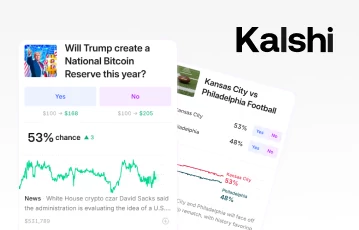
Kalshi fees and commissions
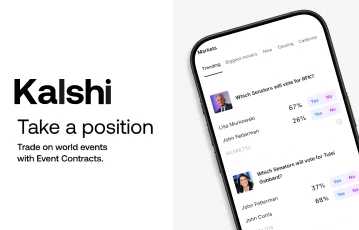
Trade on world events with Kalshi
Deposit and Withdrawal Fees
Depending on the payment method you use for deposits and withdrawals, you will incur a fee. While some methods do not charge a fee, such as ACH, there are banking options to be mindful of. Check out the following table for a breakdown of these charges:
Payment Method
Kalshi Deposit Fees
Kalshi Transaction Fees for Payouts
Debit Card
2%
$2
ACH Transfer
No fee
No fee
Wire Bank Transfer
No fee
No fee, but there’s a cap of $500K
Crypto
Varies
Varies
Where to Find the List of Kalshi Fees
Kalshi makes light work of finding out the pricing structure and full list of fees. Simply head to the Help Center, where you will find a breakdown of every fee and price you will need to know. With a handy table containing all fees, you are never in the dark.
Pros and Cons of Kalshi Fees and Costs
While there are some Kalshi fees to consider, most of these are relatively low, such as the fixed Kalshi withdrawal fees. To keep an open mind and balanced view, here’s a list of key pros and cons:
Pros and Cons
Competitively low fees
No fees on bank transfers
No charges for cancellations
Transparent price structure
Kalshi fees are per contract
Conclusion: Learn All About Kalshi Fees and Commissions
Kalshi might apply some fees to certain things, such as Kalshi deposit and withdrawal fees, but these are minimal. In most cases, you can get away without paying a fee on your deposits and withdrawals, provided that you use a bank transfer.
When it comes to trading contracts at this particular
prediction market site, the fees are for every contract. While this is good news for those who only trade low amounts of contracts, it can soon build up for frequent participants. As you can see, highs and lows depend on your usage and payment methods.
Understanding the price structure is crucial for working out your potential profits. Thankfully, Kalshi has a clear structure with transparent fees, so there are no nasty surprises. If you are intrigued and want to find out more, you can tap the on-page links on this page to get an account up and running.
Kalshi Fees FAQs
Kalshi’s deposit fees vary depending on your preferred payment method. For example, debit cards incur a 2% fee, while crypto will vary depending on the specific crypto you choose. On the other hand, bank transfers typically don’t incur any fees.
No, Kalshi doesn’t surprise you with any hidden fees. Kalshi is upfront about every price and fee, so you know exactly what to expect before you start trading.
Both trading and maker fees have specific formulas to calculate the fees. We have highlighted these formulas, so you can work out the fees of your potential trades before you commit.
Kalshi offers a broad range of prediction markets and exchanges, so you can explore all of your favorite options. Whether you are looking for
Kalshi election markets, sports, or other real-world events, Kalshi has it all.
Yes, you can help to minimize your fees by limiting the number of trades you participate in and depositing or withdrawing larger sums instead of multiple smaller amounts. So, next time you participate in
Kalshi sports prediction markets, consider the number of contracts first.
















 Kalshi fees and commissions
 Trade on world events with Kalshi