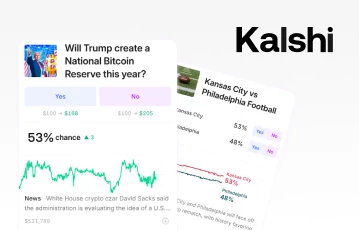
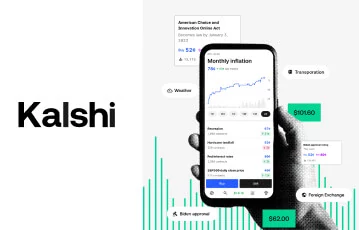
Kalshi event contracts let you trade on real-world outcomes, like whether inflation will rise, a candidate will win, or a player will be drafted in the first round. Each contract reflects how the market expects the outcome to unfold.
Top Kalshi Alternative for October
We see this as a practical way to put your insight to work. Kalshi gives you access to a regulated exchange where you can trade on real-world events instead of just watching from the sidelines. It’s not gambling but a transparent, easy way to make a forecast and get paid when you’re right. Some state rules may still apply.
Details
Available Languages
en
Accepts Customers from
US
Show States
AL, AK, AZ, AR, CA, CO, CT, DE, FL, GA, HI, ID, IL, IN, IA, KS, KY, LA, ME, MD, MA, MI, MN, MS, MO, MT, NE, NV, NH, NJ, NM, NY, NC, ND, OH, OK, OR, PA, RI, SC, SD, TN, TX, UT, VT, VA, WA, DC, WV, WI, WY
Here are a few facts before we go into more details.
Fact
Detail
Regulator
Commodity Futures Trading Commission (CFTC)
Contract type
Yes-or-no event contract
Price range
$0.01 to $0.99
Payout
$1 if correct, $0 if wrong
Availability
Most US states (some restrictions apply)
Contract types
Politics, economics, sports, crypto, weather, culture, and more
Overview of Kalshi
Kalshi is a US based prediction market where you can trade on real-world events. It’s centered on yes-or-no questions, and you simply choose the outcome you expect. Notably, Kalshi operates as a federally regulated exchange that is approved by the Commodity Futures Trading Commission (CFTC). That means it follows financial market rules rather than gaming regulations. The experience may feel similar to betting, but you’re trading contracts in markets shaped by other traders, not betting against a house.
What Is an Event Contract on Kalshi?
An event contract is a simple yes-or-no trade tied to a real-world result. It asks a question like: will the US unemployment rate rise this month? or will Team X win their next game? And you choose your answer and buy a contract based on what you think will happen. If it matters, there’s probably a question about it on Kalshi.
Each contract has a price between $0.01 and $0.99. That price reflects what the market thinks the chances are. A lower price means the market thinks the event is less likely to occur, while a higher price shows other traders perceive a greater likelihood of occurrence. If you’re right, the contract settles at $1. If not, it settles at $0. You keep the difference between what you paid and the payout.
These contracts are straightforward, and just like
Kalshi sports markets, there’s no margin, no leverage, and no surprises. You always know your maximum risk and your potential reward before you click Buy.
How to Trade Kalshi Event Contracts
Kalshi’s event markets are federally regulated and available in most US states, with just a few exceptions. To get started, you’ll first need to register. Click one of the banners on this page to visit Kalshi, create your account, and verify your identity. It takes just a few minutes.
Once that’s sorted, here’s how trading works:
Browse the markets:
Kalshi lists real-world events across politics, economics, sports, crypto, and more. Every market is a yes-or-no question with a deadline. So go through each one to find what interests you, and what you’re more informed about.
Choose your side:
You decide whether you think the outcome will happen (Yes) or not (No). Each contract shows a real-time price between $0.01 and $0.99. Remember that higher figures mean the market sees it as more likely.
Buy contracts:
You can enter at the market price or set your own. Each contract settles at $1 if your prediction is right, or $0 if it’s wrong. And what your Kalshi event contract payout will be is known upfront.
Exit or let it resolve:
You can sell your position early if the markets are going against your choice. Or, hold it through the event and let Kalshi settle it for you. Either way, the outcome is locked in and funds go straight to your account.
Pros and Cons of Kalshi Event Contracts
Pros and cons
Regulated by the CFTC
Fixed maximum loss per trade
Wide range of real-world markets
Option to exit before resolution
Not available in all US states
How to Cash Out an Event on Kalshi
You don’t have to wait until the event ends to take action after entering a trade. You have the choice of taking out your position early or if you prefer, holding on until the result is known. Here’s how to cash out event contracts on Kalshi:
Option 1: Sell Before the Event Ends
One of the best parts of Kalshi contract events is that you can decide to sell your position back to the market. It’s a fantastic choice if the prices have changed in your favor and you want to collect your result without waiting for the final outcome. It’s also helpful to minimize losses, especially if you feel the outcome may go against your expectations. Remember that you’re always trading at real-time prices, so timing matters.
Option 2: Hold Until It Settles
If you hold your contract through the event, Kalshi will automatically settle it as soon as the result is confirmed. Correct positions pay out $1 per contract, while incorrect ones settle at $0 so you get nothing in that case.
After either route, your available balance updates instantly and
Kalshi fees
are deducted. You can then withdraw funds at any time via your linked US bank account.
Tips for Trading Kalshi Event Contracts
Several Kalshi event contract strategies exist, but none is 100% certain. However, trading on Kalshi is about timing, research, and understanding how different factors affect the market. We’ve put together a few tips that may help you make informed decisions.
Choose More Than One Category 🌍
You may want to avoid focusing all your trades in a single category like politics or inflation. There’s a lot to explore. It can be smart to widen your selections to other sectors like political, economic, and climate markets. This will help reduce the impact of any one surprise outcome and gives you exposure to different types of market changes.
Don’t Lose Track of Time-Sensitive Data Releases ⏰
Many markets on Kalshi, especially economic markets, settle based on official government data. So if you’re trading a contract in this category, you should follow release calendars like the Bureau of Labor Statistics (BLS) or FOMC meetings.
Use Smaller Amounts to Test New Markets 💵
There’s a wide range of prediction markets to try out. Thankfully, Kalshi lets you participate with just a few dollars per contract. You can start small if you’re new to a market. First come to grips with how it works before committing further.
Know Your Exit Plan 🚪
You don’t have to hold until resolution. If a market changes in your favor or against your expectation, you can exit early and hold on to your wins. This gives you a little more control and protects you from sudden changes close to the deadline.
Be Aware of Kalshi Fees 💲
Kalshi charges a small trading fee and settlement fee. They’re transparent, but if you’re managing multiple positions or larger volumes, they can affect your bottom line. Build them into your expectations before taking any trade.
Make predictions on the climate
Make predictions on crypto
What Events Can You Trade on Kalshi?
Kalshi lets you trade on the outcome of real-world events, from major political decisions and economic reports to market moves, weather trends, and lots more. If it’s important, chances are there’s a market for it on Kalshi. There are over 10 categories available. Here are a few we found during our detailed
Kalshi review:
Politics and Elections
Kalshi election markets
are one of the most actively traded markets in US politics. These include questions like:
Will a specific candidate win their party’s nomination?
Will Congress pass a budget before year-end?
Will the presidential frontrunner change in the next poll?
But remember that you’re not placing a bet, you’re trading contracts on a regulated exchange not against a house.
Economic Indicators
Kalshi features high-volume markets tied to official government data. These contracts are based on reports from agencies like the Bureau of Labor Statistics or the Federal Reserve, and include:
Will the Fed raise rates at its next meeting?
Will CPI come in higher than 3.5%?
Will the unemployment rate increase?
Equity and Financial Markets
With Kalshi’s equity event contracts, you can make predictions about things like stock prices, interest rates, or big market moves, without actually having to buy any stocks or assets. You’re just trading on what you think will happen next.
Weather and Climate
These contracts let you trade on things like temperature trends or storm risks, which can matter a lot to people in energy, shipping, or travel sectors.
Cultural and Headline Events
Aside from policy and markets, you’ll also find contracts tied to current events and social trends. These vary week to week but can include contracts like movie ratings on Rotten Tomatoes or even product launches.
Conclusion: Kalshi Redefines How You Trade Events
Kalshi gives you a way to trade what’s happening in the world, not through stocks or odds, but through direct yes-or-no questions based on real events. You’ll have access to markets on everything from interest rate decisions and election results to crypto updates and weather patterns.
You don’t need to study charts or guess the next big trend here. If you follow the news, understand how markets react, or simply have a strong opinion on what’s likely to happen, Kalshi gives you a way to act on it. If you’re ready to put your insight to the test, use the banners on this page to visit Kalshi and sign up in just a few minutes.
Kalshi Event Contracts FAQs
Kalshi event contracts are simple yes-or-no trades that let you forecast real-world outcomes and give you winnings if you’re right. You can find several events from finance to culture and weather.
Just sign up by visiting Kalshi using the banners on this page, pick an event, choose Yes or No, and trade based on what you believe will happen.
Yes, Kalshi is fully approved by the CFTC and operates as a regulated exchange in the US. You can register and start trading as long as you’re above 18 years of age. However, some states may be excluded from certain events so check what applies in your region.
















 Make predictions on the climate
 Make predictions on crypto