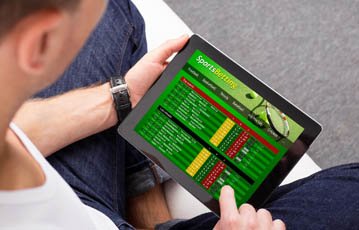
For weekend punters and more seasoned bettors alike, there is more than one way to bet, and when you’ve had betting exchanges explained, they can offer more versatility to your strategies. In this guide, we’ll show you how.
We will cover how betting exchanges work, what sets them apart from traditional bookmakers, as well as how to use them effectively. You will also learn about the advantages, pitfalls, and strategies that make exchange betting effective. Even if you’ve never heard of them and your first question is “what are betting exchanges?”, we’ll cover that, too.
We told you we’d cover it! In the simplest possible way, a betting exchange is a marketplace where punters bet against one another, not a bookmaker. Instead of betting on odds offered by a traditional bookie, you either
back
an outcome (betting that it will happen) or you lay it (betting that it won’t). The exchange doesn’t set odds; it simply matches customers who are prepared to lay certain odds with those who want to bet on them.
This is effectively a peer-to-peer format, although it is heavily facilitated by the exchange, and with users generating the odds and the match bets, the model allows for more competitive prices and greater flexibility in managing positions before an event concludes.
Pros and Cons of Betting Exhanges
Pros and Cons
Simple form of betting
Easy to read the odds
Reimbursed if results are tied
Not much variety
How Do Betting Exchanges Work?
The process of using a betting exchange sounds a little complicated, although in practice it’s relatively simple. The platform connects punters who want to bet on an outcome with those who are willing to lay it (ie. they don’t think it will happen). The exchange differs from a bookmaker in that it doesn’t have a stake in the result. It merely facilitates the transaction, and takes a small commission – usually between 2-5% – on winning bets.
Backing and Laying in Practice
A back bet is simple and works much like betting at a bookmaker: you’re confident that something will happen. For example, you might bet on Liverpool to win at odds of 2.50. A lay bet is the opposite. You’re equally confident that it won’t happen, so in this match, laying Liverpool means you win the bet if they
don’t
win. It doesn’t matter whether it’s a draw or a loss – you’ve
laid
Liverpool to win.
If you have laid Liverpool at 2.5 for £10, the bet plays out as follows:
Either Liverpool loses or draws, and you win the £10 you staked
Or Liverpool win, and you must pay out £15, which is their profit on 2.50 odds
With betting exchanges explained, the amounts don’t matter a great deal for now; they will be calculated by the exchange anyway, so let’s deal with liquidity.
Liquidity and Matching Bets
When you make a bet-back or lay, it doesn’t always go through automatically. The exchange needs to match you with someone who wants the opposite side of the same bet. The bet will only be fully made if there is liquidity: ie, there are users willing to stake money on the other side of it. Again, an example may shed some light on this:
You want to back a team for £20 at odds of 2.0
If only £10 is available to lay at those odds, only part of your bet can be matched
The remaining £10 sits as an unmatched bet until someone else lays £10 to match it, or until you cancel
Liquidity is highest in popular competitions within popular sports – you’re unlikely to struggle for liquidity in a Premier League football match or a prestigious horse race. In low-liquidity markets, it is more common for bets to remain unmatched or only partially matched.
This approach also allows you to trade: you can back a selection when the odds are high, and then when the odds shorten, lay it. If you’re experienced, this can be a way to lock in profit before an event has finished. This is complex, though, and we would only recommend trying it when you’ve not only had betting exchanges explained but are comfortable with the process; much like a
spread betting strategy
it can be tricky for beginners.
Betting Exchanges Vs Traditional Bookmakers
To get betting exchanges explained clearly, it helps to see how they differ from fixed odds sportsbooks. Traditional bookmakers offer set odds and accept bets in one direction only – they are the counterparty against whom the punter is betting. Their profit is built into the odds with a margin they calculate themselves, known as the overround. While the
fixed odds meaning
is generally simpler than this, it helps to set it out like this in comparison with exchanges.
Exchanges, on the other hand:
Allow you to choose the odds on which you are betting
Let you take either side of a bet – or both, in some cases
Charge a commission only when you win
Have no reason to limit, or restrict, successful punters
For a clearer comparison, check out the table below:
Compared: Betting Exchanges and Traditional Sportsbooks
Feature
Betting Exchange
Traditional Bookmaker
Odds Set By
Users (market-based)
Bookmaker
Can Lay Bets?
Yes
No
Margins
2–5% commission
Built-in overround
Account Limits
Rare
Common for winners
Betting Exchanges Explained: How to Use Them
Betting exchanges are particularly useful for bettors who want to make bets that are a bit more nuanced than the standard. They certainly have their challenges, and it is advisable that you learn as much as you can before heading to a betting exchange. Knowing how to use them – and what kind of bets you can use them for – is an indispensable step.
Core Options
Back bets:
Betting that an event will happen
Lay bets:
Betting that it won’t
In-play bets:
You can use an exchange to bet while an event is unfolding: see below
Trading:
Locking in profit using an in-play bet, or cutting losses by placing back or lay bets at different times
Arbitrage:
More commonly known as “arbing”, an arbitrage bet is used to exploit pricing differences between bookmakers and exchanges
Hedging:
Offsetting exposure from bets placed elsewhere.
For those interested in different betting approaches, it is worth considering a
prop betting strategy
for event-specific markets including “first goalscorer” or “number of corners. These odds are often available at exchanges and sometimes at better prices than you will find at a sportsbook.
Matched Betting
One of the primary uses of exchanges is to practice matched betting, a style similar to arbitrage in which bettors take advantage of betting offers to place a bet at a bookmaker and then lay it at an exchange. As they don’t need to back the event using their own money, laying it means that whatever the outcome of the event, they can usually make a profit on the bonus bet. This
is
a very technical way of betting, and it is important to read up on the process before you attempt it, as a single mistake can cost you very dearly.
Risks and Things to Consider
While betting exchanges are a useful tool, they are unlike standard bookmakers and as such, you need to know what you are doing. This isn’t always immediately evident when you’re getting started, so the following details are important to remember.
💧 Liquidity is all-important:
At a bookmaker’s site, every bet you make will be honoured because the bookmaker always has enough liquidity. At an exchange, particularly if you are betting on something esoteric, your full bet might not be matched. This is particularly important in arbing and matched betting.
📚 There is a learning curve:
Laying is not betting on the opposite of a win; it’s betting on anything other than a win. And if you think that’s complex, wait until you have to calculate how trading works.
💰 Commissions apply:
The exchange will take a slice of a winning bet, so if the odds look tempting, bear in mind that you need to allow for 2-5% of your winnings being skimmed off.
🎉 Exchanges rarely offer promos:
It’s exceedingly uncommon to find boosted odds, bonus bets, or insurance for an exchange bet.
All this being said, once you’re familiar with the way exchanges work, the risks become manageable, and there are ways to offset the cost. Just take extreme care to ensure that you have factored in the nuances of exchange betting.
Conclusion
Betting exchanges are a valuable tool in anyone’s betting arsenal, but they do involve a betting curve and work very differently from sportsbooks. Once you’ve surmounted that learning curve, they allow you to make different kinds of bets and open up new possibilities. Take the time to learn the relevant terms and how they work, and they can become a hugely useful part of your betting strategy.
Betting Exchange – FAQ
It means you are betting against an outcome. If you’ve learned
how to bet on football, you will be used to betting on a team winning; with lay betting, you’re betting on anything but that.
Yes, completely legal – it’s just a different method of betting, where people, not sportsbooks, are the ones betting against the punter. As long as you pick a licensed provider, there’s no problem.
Not many, but on the other hand, this means you aren’t tied into wagering requirements. What you may find is that occasionally they will offer commission-free periods, which can be exceptionally attractive if you’re arbing or matched betting.